Career Session
What career opportunities are there after my PhD?
How can I take the next step in my career?
What can I already do for my professional future during my PhD?
Many of us ask ourselves these questions at some point during the PhD and the answers are not easy to find. The career session at the EUREKA Symposium is meant to help PhD students find their way. We will discuss with guests who have taken different career paths what experiences they have had and what advice they would like to give to the current generation of PhD students.
We are delighted to welcome our guests for the EUREKA! 2026 Career Session
Dennis Eckmeier
Science Journalist
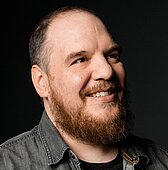
Dennis works as a science journalist for one of the largest German speaking science channels on YouTube, ‘Doktor Whatson’. The channel received several awards for journalism and science communication, including the Grimme online Audience Award and Sartorius LifeScienceXplained. Dennis writes about a variety of topics in science and technology.
He received his biology degree at the University of Cologne in 2006 and a PhD in neuroscience at Bielefeld University in 2010. He worked as postdoc at Cold Spring Harbor Laboratory, USA, and at Champalimaud Research, Portugal until 2018.
Judith Gabel
Science Communication Lab - Deutsches Museum
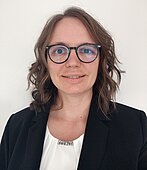
Dr. Judith Gabel studied physics in Würzburg and Stony Brook (U.S.) and subsequently earned her Ph.D. in experimental physics in Würzburg. She then spent three years conducting research as a postdoc in England before moving to Munich, where she shifted her focus more toward science communication: In a joint project between LMU and TU Munich, she developed courses on quantum technologies for industry and sought ways to convey this complex physics in an accessible manner. Her move to the Deutsches Museum marked her full transition into science communication: There, she heads the Science Communication Lab, which serves as a forum for discussing current research as well as a testing ground for new science communication formats.
Barbara Hissa
Managing Editor of the Beilstein Journal of Nanotechnology
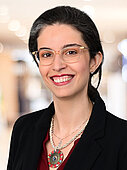
Barbara Hissa graduated in Physics and obtained her Master's and PhD degrees in Cell Biology, from the Universidade Federal de Minas Gerais, Brazil. Barbara also did a postdoc in biophysics at the University of Chicago. After that, she moved to Germany to work as Deputy Lab Head in the Surgical Department of the University Hospital Mannheim investigating metastasis mechanisms. She then transitioned to the Beilstein-Institut as Managing Editor the for the Beilstein Journal of Nanotechnology. Her current interests include: diamond open access model, research integrity, research inclusion and diversity, fair research assessment, science policy, nanotechnology, nanoscience, science communication.
Tobias Kerrinnes
Head of Scientific Infrastructure - Helmholtz Institute for RNA-based Infection Research
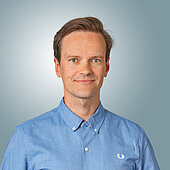
Tobias Kerrinnes is a trained microbiologist with affiliations at the Robert Koch Institute, the University of California, Davis, and the Helmholtz-Center for Infection Research. After joining the Helmholtz Institute in Würzburg (HIRI), he served as lab coordinator, interim core facility head, and interim administrative head of the institute. Since May 2024, he has led the scientific infrastructure unit, working to create an excellent environment for scientists at the Helmholtz Institute.
His career reflects a journey from web lab scientist to a vital liaison connecting science and administration. This role involves engaging deeply with science, understanding the everyday needs of scientists, technologies, facility management, and administrative processes. The goal is to anticipate future developments and create the most supportive environment for every scientist to thrive in their research.